
Accuracy doesn’t only come down to triggers, optics, or caliber. Most often, it’s the omitted parts that are not bolted to the gun that play the largest role in shot consistency. Shooting bags, the silent players in every successful precision shot. They are not just bags of filler. They’re carefully designed tools that create a stable shooting foundation, make it easier to move, and provide shooters greater control over main thing that is important the location of impact.
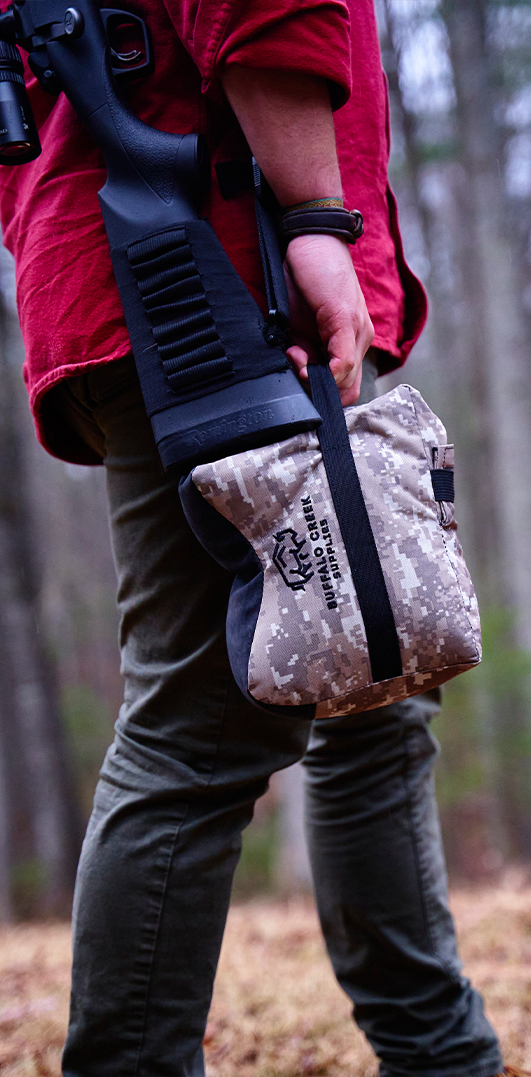
Image credit: buffalocreeksupplies.shop
In a world where long-range precision and repeatable performance are high priorities, a precision shooting bag can be the difference between a successful and unsuccessful a shoot. The degree of control these systems of support provide is unparalleled regardless of whether you’re trying to pinpoint a distant target at a mountain range or zeroing your rifle scope at the range.
Shooting Bags Do not come in a single size to fit all shooting tools.
The importance of bags for shooting is how they match the shooter’s environment as well as the rifle’s setup and shooting location. A hunter navigating through rough terrain might need different gear than shooting from a benchrest position dialing 1/4 MOA groups.
Let’s break it down.
A benchrest shooting bag is usually large and flat, with a large density fill. What’s the goal? Secure the forend of the rifle using a minimum amount of flex. The bags stop the rifle from moving, even when it is being recoiled. They are typically combined with a bag in the rear to assist the buttstock. This combination creates a rock-solid platform.
However field shooting requires flexibility. These types of situations are best than sand-filled wedges or small, flexible bags that can be placed in difficult places like fence rails or sloping stones. The most effective setups let the shooter get comfortable quickly and keep their position without straining their muscles.
This is where the concept of the Best shooting bag shifts from being about a specific brand or model to being about versatility and fit for purpose. The “best bag” is the one that is able to meet your needs but not always the one with the biggest advertising campaign.
Small Adjustments, Big Differences
A shooting aid without batteries, wiring or calibration is incredibly helpful. A shooting bag that is precise gives shooters the capacity to make small, nearly invisible adjustments to forward pressure in the barricade bag with a slight squeeze to raise the muzzle, or an unforced load into the back rest.
These micro-adjustments create a stable, controlled atmosphere that directly affects the shot’s placement. The appropriate bags can assist you to make better groups on the distance. The process of shooting is not only about “support” but it’s as well as refining every element.
The Shooter’s Shotgun was designed to the Shot but also for the shooter.
Shooting for extended periods of time can be associated with fatigue. Being in a position to shoot, particularly in awkward field setups, can wear down even the most experienced shooters. Rest bags for shooting that are strategically placed can be used for two reasons. The shooter is relieved from the burden of being required to balance or hold the rifle manually. They can instead concentrate on breathing, alignment and the trigger control.
The ability of a shooting bag to adapt to the unique body positioning and equipment setup of a shooter is frequently ignored. A good bag is not just designed for the gun It also has to work with the environment and the weight of the rifle along with the length of the optic as well as the body posture of the shooter.
Stability is an art, and the right gear helps it.
Precision shooting doesn’t only mean raw talent. It’s about combining tiny advantages to give solid outcomes. Shooting bags can be a quiet but a significant advantage. Shooting bags aren’t designed for shooting but they can give you the support you need to become a better shooter.
A precision shooting bag, or an adaptable shooting rest is an excellent addition to your arsenal, whether you’re at a match, practicing on the range, or glassing a game up a hillside. It’s worth the cost every time you shoot. Because at the end of the day confidence doesn’t originate from being able to predict where your shot is going to take off, it’s about knowing. It all starts with solid foundation.